Showing posts with label travel. Show all posts

Friday, January 31, 2020

Teaching in China during the Coronavirus

On January 18, I departed Xi'an for what I thought was a short 12-day stay in Wisconsin, with my little brother's wedding being the highlight of the trip. As I write this, a calendar reminder popped up, reminding me that my flight to Xi'an was to happen in 15 minutes. And yet I am writing this from the couch at my condo in Madison, WI.

At the O'Hare airport on December 19 (one day later than planned due a flight delay and then missing the next flight), I saw a small sign that urged those traveling from Wuhan to self-report if they had a fever or cough. Because it didn't apply to me, I didn't give it much thought. Then I waited in the long line with the HUGE number of Chinese students returning to Madison for the start of the second semester. The at-capacity bus I was in, along with the other two buses, contained virtually all individuals from China.

Just a day later, the city of Wuhan became known to the world. I began thinking of those 16 hours I spent on the plane and then a few more hours on the bus with people from China. Had any of them been in Wuhan? An administrator from my international school in Xi'an contacted the faculty querying about where we had traveled and if we had any contact with those in Wuhan. On Monday, after hearing that school would be closed for at least two more weeks, I contacted my principal, requesting that I remain in Wisconsin until the re-opening date is definite.
 Map showing the current number of reported coronavirus infections
When I look at this map and see how the numbers continue to escalate every day, I am grateful that I arrived prior to the major outbreak and thankful that I did not have to return on the 30th, as originally planned. Friends in Xi'an reported store/mall closures, reduced store inventory (especially of produce), and the inability to find any masks and hand sanitizer. Getting around by public transportation is severely impaired, with the suspension of service, limited routes/hours, or long delays due to the screening of passengers. Several highway exits are also closed and health checks are being conducted at those open. Many flights are also being canceled. Didi (the Chinese equivalent of Uber), the most popular way for foreigners (and many locals) to travel within the city, has now suspended its service. People are strongly urged to stay home, cooped up in their high-rise apartments. All those entering the apartment complexes are checked for fever and cough.

Currently, there are 87 confirmed reported 9,742 cases in the Shaanxi province; of those, 32 are in Xi'an. Even the "small" town where a Chinese friend of mine has been cooped up in her family's apartment now has some infections. She is especially concerned for her grandma, who already has health issues. I pray for the health and safety of all the hard-working, kind citizens of this populous country.

Starting on Monday, I am to be giving art assignments to my students online. I can't use any resources that require the use of a VPN, in order to accommodate the Chinese students. So that means no Google apps, no YouTube, Vimeo, Pinterest, and even many seemingly innocent sites. Art supplies will have to be kept at bare minimum as well. If anyone has had experience or advice on teaching upper elementary art (particularly PYP) under these restrictions, I'd love your insight.

For now, be assured that I am safe and healthy in Wisconsin.


Sunday, November 04, 2018

A Stroll along Xingqing Lake


This weekend, I went to Xingqingong Park in Xi'an to see the autumn colors there. This park, the largest public park in Xi'an, is built on the site of the Xingqing Palace of the Tang Dynasty (616-907 AD). Walking through a traditional-style gate, we took a path leading to the main lake. Although it was overcast and hazy, the autumnal colors reflected nicely on the water's surface. Several traditional-style buildings peeked in between tall willow trees.
Traditional-style buildings along Xingqing Lake
Although it was fairly early in the morning, the park was already alive with people. Many others chose to take the path circumnavigating the lake.

Colorful boats, some styled with childhood characters, were parked along the shore. I can imagine that the lake would be dotted with them in the warmer weather.
In the distance, skyscrapers from a modern Xi'an contrasted sharply with the elegant traditional park structures.
Now that I've found this park, I am eager to return to it in the different seasons. It reminds me of my walks around the beautiful pond at Changgyeonggung Palace in Seoul.

Sunday, September 16, 2018

A Walk On Top of the City Wall - part 1

Archery tower on top of one of the ramparts
I hadn't intended to walk the city walls on this day, but after walking a bit along a park-like path alongside and looking up at the massive structure, I couldn't stay away. Its 40-foot (12 meters) high brick walls with protruding ramparts beckoned me.

Yongning - South Gate
I walked up the promenade leading to the South Gate, known as Nongning, meaning Eternal Peace. This was extremely close to the subway stop where I exited. Being one of the major tourist sites in the city, signs in English were present. I paid for the entrance ticket by having the QR code on my WeChat app scanned – much easier than using cash.
A wide and lengthy walk
Once on top of the walls, the width and legnth of the wall impressed me. It is between 40-46 feet in width. From my view at the South Gate, I couldn't even see to either corner. To make the trip around the 8.5 miles (13.7 km) wall more manageable, many people opt to rent a bike. Tandem bikes were quite popular. Riding at about medium speed, the whole circumnavigation would take between 1.5-2 hours. For those in a hurry, battery car can take smaller groups around.  Others like me chose to walk.
West Gate (Anding)
Built by the first emperor of the Ming Dynasty (1368-1644), the Xi'an City Wall was actually an enlargement of an original city wall made from rammed earth. The current structure is the largest and best-preserved city wall in China and one of the largest ancient military defensive systems worldwide. Around every 394 feet (120 meters), a rampart protruded from the wall. On top of each rampart was an archery sentry building. From here, soldiers could shoot arrows while being protected. The distance between each rampart was just within the range an arrow could be shot. Along the outer part of the wall were crenellations from where arrows could also be safely shot. The wall has a total of 5,948 of these battlements. Each gate had three gate towers. The outer one was used to raise and lower the suspension bridge. One opposite to it was used as a defensive outpost. An inner one was used as the main entrance to the city. Occasionally along the inner side of the wall, one could see very steep ramps that were once used for horses, but these were now blocked off. 

When I reached the West Gate (Anging) which means Harmony Peace, I had the option of descending. Seeing how clear the skies were and how pleasant the temperature was, I decided to push on.
Old and new structures side-by-side
Because I walked, I had plenty of opportunities to read the signs that were nicely posted in Mandarin and English. I also was able to take plenty of photos from different views.  Looking beyond the walls, one could see large contrasts in architecture, from run-down old structures to modern skyscrapers.
Wedding photos
A few bride and grooms took advantage of the beautiful weather and had some photos taken on this famous landmark. What a challenge the photographer must have had with the many bicyclists and pedestrians vying for the same space.
Northwest Watchtower
By the time I reached the northwest watchtower, the sun was already starting to get lower. I especially liked the roof of this building. Wanting to catch a taxi before it got dark, I pressed onward.
Bell from 1428
In the half of the wall that I walked, I saw a few bells. This bell near the Anding gate was from 1428 and was 5.6 feet (1.7 meters) high. Its rich tone once alerted people of the city.
North Gate at sunset

Just as I reached the North Gate (Anyuan), meaning Forever Harmony, the sun began to set. The flagposts, lamps, bell, and gate tower were now silhouetted against the warm glow of the sunset. It was a beautiful first trip to the Old City. With the address of my apartment written in Mandarin, a taxi driver successfully took me back to the concrete jungle of highrise apartments where I live about 25 minutes away. It was a good first adventure out.

Wednesday, August 29, 2018

In Xi'an - first post

Now that I have internet via hotspot from my phone, I'm getting around to posting about my experiences in Xi'an as a teacher at an international school in this historic city.

On late Sunday afternoon, I arrived in Beijing. The process was a bit longer than anticipated - waiting in line to go through immigration, shuttle train from international to domestic terminals, security screening, and more. I was thankful to see that all my luggage arrived from the 13 hour Chicago to Beijing flight as well as the Milwaukee to Chicago flight. After collecting the pieces, I had to go through another security screening with the luggage. If only there were the perks of Global Entry here. The one medication I was taking with me drew extra attention and further scrutiny, but thankfully they let me keep all the bottles. After another short scan of all the luggage, I then waited in line for domestic transfer. Relieved of my luggage, I quickly went to the gate and was one of the last ones on the plane. Those 2+ hours went by quickly!

In a little over 2 hours, I landed in Xi'an. Alas, two of my suitcases did not arrive with me, likely due to the short amount of time after I dropped off the luggage for transfer. Thankfully the airport said they would deliver the suitcase to the school address the next day. The school principal and nurse were there to greet me. The principal took me to my apartment. After taking a brief, lukewarm shower (the gas hookup needed some attention) by maintenance staff, I went to bed. I sat down on the bed and heard a THUD. It was so hard, I could knock on it. Tired, I gave it a try, hoping that the A/C and nice comforter were enough comforts to override the rock-hard "mattress." Thankfully my down pillow was in the suitcase that arrived with me, so I had another softer item. After a non-so-super sleep, I got up to enjoy the sunrise. I had quite an overview from the 34th floor, the top floor of the building. No, it's not a penthouse.
Sunrise from the enclosed balcony on the 34th floor
I proceeded to unpack and put items away. A few hours later, a gal from the agency the school partners with came to take me to IKEA. Later we also went to the gas company to pay $30 for 2 months worth of gas. A rep from the cell phone company came right to my apartment and set up my service. For $15 a month, I have unlimited data, but after 20 GB,  the data is slowed to 3G. The school was able to communicate with the airport to deliver my baggage to my apartment complex, so the evening was spent unpacking that and setting up/unwrapping IKEA items. For a later supper, one of the teachers took me to a shopping mall where we ate at a Japanese restaurant.

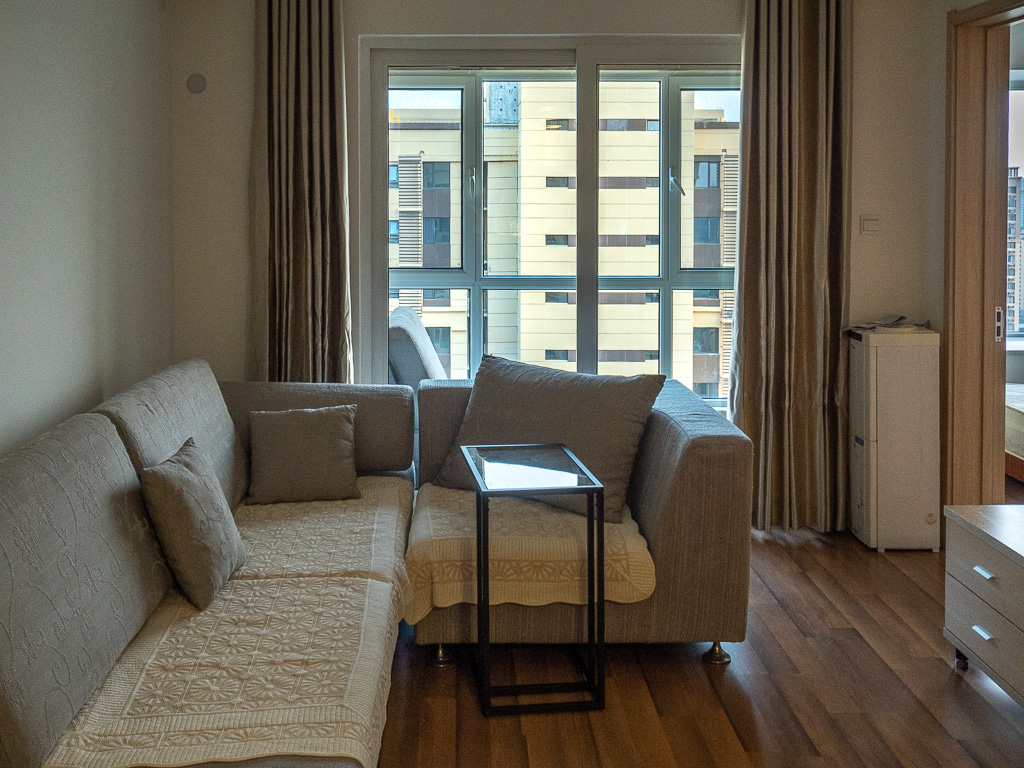
The next morning I had to go with a school nurse downtown to a government clinic for foreigner workers entering China as well as Chinese people seeking to study/work abroad. Because we arrived early, my turn in the queue was not long and after going through the multiple stations (ultrasound, x-ray, blood, vision, etc), we were done. In the afternoon, the gal from the agency went with me to a supermarket that also had imported items. Although I was able to figure out most items, she helped decipher a few labels that were only in Mandarin and lacked visual clues. Now that I had a screwdriver, I was able to assemble my couch table. My apartment was coming together. Below are a few photos of each room.


Living room and enclosed balcony (a rod can be cranked down so you can hang laundry from hangers). Note the identical building as seen through the balcony window

Dining room table and door entry

Master bedroom with closet

Master bedroom and view

Spare bedroom with slightly less hard real mattress

Spare bedroom desk and closet. I'll try doing my drawing here.

Bathroom with washing machine that is complex and all in Mandarin

Shower with just a short lip - easy for water to overflow onto bathroom floor

Kitchen with two burners and no oven. Refrigerator is very narrow.

Spare room with raised storage. I presume a bedroll could be placed on top of it. The next part of the building blocks out most light.

Wednesday, August 22, 2018

Visa in hand (finally); Xi'an bound

After multiple authentications, notarizations, governmental letters of invitation, and a visit to the Chinese Consulate in Chicago,  my two-month+ process to get a Chinese "Z" work visa has finally yielded results. I have missed orientation week and the first week of school but will soon join the staff and students at the new facilities of Liangjiatan International School in Xi'an.  On Saturday morning I will leave the land of cheese & brats and exchange it for chopsticks and noodles. Bring on year 17 of international teaching! I will have a spare bedroom, so visitors are welcome!

Thursday, June 28, 2018

Xi'an, the City

The capital of the Shaanxi province in the central-northwest region of China, the city of Xi'an is home to 12 million people. The city of Xi'an is over 3,000 years old. For 1,000 of these years, it was the capital city under 13 dynasties. In fact, around 750 AD, Xi'an was the largest city in the world, with over 1 million inhabitants. Historical ruins, museums, and cultural relics abound. It is most famous for the 3rd century Terracotta Warriors, which were discovered in 1974 and are now considered an eighth wonder of the world.

xi'an's location in china
 Xi'an was the end of the Silk Road. Its well-preserved massive city wall is one of the most complete city walls in China and one of the largest ancient (194 BC) military defensive structures in the world.  Several pagodas, such as the 7-story Giant Wild Goose Pagoda (652 AD) and the Drum Tower are also well-known. The Muslim Street is well-known for its good eats. Embroidery and paper cutting are two crafts of the region.

Xian A high-speed bullet from Beijing takes about 4 1/2 hours. The temperatures are hot in the summer 80°F (32°C) and cold (around freezing) but dry in the winter. Snow may occasionally fall but only lasts for a brief period.  Annual rainfall is 21.8" (553mm).


Xi'an is also an important economic, scientific, and industrial city. Electronics, aerospace technology, high-tech products, autos, and bio-pharmaceuticals are produced here.


Qin Ling Mountains


There are some areas of natural scenic beauty such as the Qinling Mountains (home to the Qinling pandas). The Hua Shan (Flower Mountain) is one of China's most sacred mountains. Perched on top of it is the Xiyue Temple. Mount Taibai National Forest Park is a zoo of China and has nearly 1,700 types of insects and animals, set in a natural environment.


BBC has a good series on Xi'an.

Wednesday, June 27, 2018

Xi'an Bound

In a few short months, I'll be departing the land of cheese and bratwurst and calling the city with all those clay soldiers my home.

Starting in August, I will be teaching art for grades 3-5 at Xi'an High Tech International School. This relatively new school was set up to meet the needs of a growing international community, including the neighboring high-tech companies. Samsung and Johnson & Johnson are two such companies that send large numbers of students to the school. In fact, 39% of the students are Korean. While there are 22 nationalities represented, a large percentage of the students are ethnic Chinese.
Campus (drawing)

The school has been busy constructing a brand new $130 million campus on a 66,600 sq meter campus. An architect firm from Washington, DC has undertaken the project. The campus has a 3-floor building for general classrooms, and separate buildings including an indoor sports center, indoor swimming pool, theater, and black-box theater. A state-of-the-art HEPA filtration system is installed.
Classrooms (PK-12)

Enrollment in the 2017 school year was 320, but they anticipate to have 400 students for this coming school year. More than half of that number is at the elementary level. The non-profit school is now a full IBO world school, with its newest certification of PYP occurring in 2016. Currently, the elementary school has one class per grade level, but this will be expanded to two starting in the 2018-19 school year. Class sizes will typically be between 12-22 students. With the increase in classes, it was decided that a second art teacher was needed.
Indoor Swimming pool

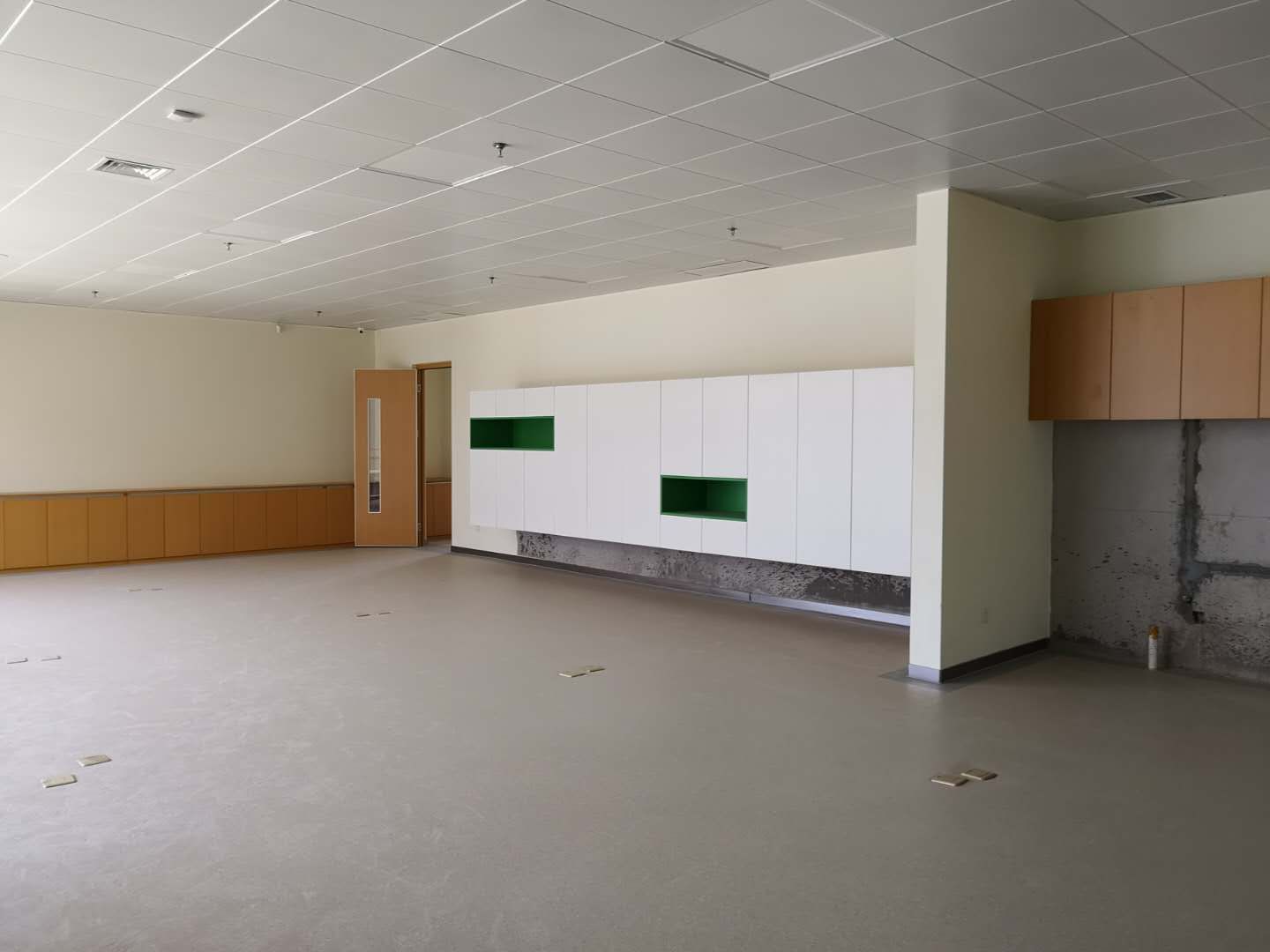
When speaking with the elementary principal (who is from Ireland), he said that art, music, PE, etc. teachers are called "single-subject teachers" at the school. Although he was good with scheduling, the principal (a former PYP coordinator and teacher himself) he wasn't all that knowledgeable about the unique aspects of such subjects. Therefore, those teachers were asked to design their schedules. For the upper elementary, students will have art for two 40-minute periods per week, typically as a double-period. There will be two art rooms, one of which contains a kiln room. Below are some photos of the yet-unfinished art rooms.

Art room with new tables

Unfinished and unfurnished art room

The school also has a Makerspace area and a Teaching &  Curriculum Center. For tech, the school has SmartBoards, iPad cart, MacBook Pros (more hopefully coming), a 3D printer, and some drones.


The school is located a distance outside of the main city of Xi'an and also is about 45 minutes away from the mountains.

Tomorrow I'll write a bit about the city of Xi'an.

Another adventure awaits!


Thursday, January 19, 2017

Kenneth Bae – A Modern Paul

Traveling and living overseas has created a heightened sensitivity and awareness of events that happen outside the border of my home country. Not only am I more knowledgeable about where those events are occurring, but there is a personal connection.
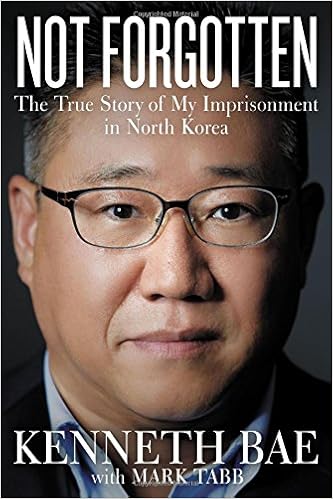
Having lived in South Korea for four years, I have read quite a few books pertaining to the Koreas on both side of the 38th parallel. My collection of read books (and documentaries) on North Korea is getting quite large. Each of the books, such as Barbara Demick's Nothing to Envy and Yeonmi Park's In Order to Live  enlightened me on a slightly different aspect of the people and country called North Korea. My latest book I read on the "Hermit Kingdom" was Not Forgotten: The True Story of My Imprisonment in North Korea had an entirely different perspective. Instead of trying to escape the horrible prison labor camps such as in Escape from Camp 14, Kenneth Bae's true story mainly focuses on the transformations which occurred while a "prisoner of Jesus Christ" in North Korea.

Although I highly encourage you to read the book, here is a basic summary. Kenneth, an American missionary of Korean descent, was arrested after a portable hard drive was discovered in his bag when his tour group arrived in the country from China. Even though he admitted to being a missionary who had made the mistake of accidentally leaving the backup hard drive in his bag, the North Korean government convicted him of the highest level of treason against the country.

Sentenced to 15 years of hard labor, Bae originally prayed and hoped for quick release - even though he knew he was being used as a political pawn. Now he was forced to manual labor from 8am-6pm out in the extreme elements and then subjected to the political brainwashing of the TV in the evening. Prior medical conditions exacerbated the already difficult situation, along with isolation and uncertainty. It wasn't until he asked the Lord to do His bidding and use Bae while "in chains" that things turned around for Bae. This was such a parallel with the Apostle Paul, who while imprisoned for witnessing about Christ, shared the Gospel with the prison guards. A sense of peace enveloped Bae, known as Prisoner 103; "Once I accepted this place as God's will for my life, and I started praying, God use me, instead of God, save me, doors opened". The guards took note and asked why he was so happy and where his hope came from, to which he responded, "God has me in here because he cares for you and all of North Korea. He wants to you to know who he is and how much he loves you."

A citizen of the US but a native South Korean, Bae had a unique opportunity. He was able to communicate directly to the guards and develop special insight. "My two years in North Korea also taught me what it means to have compassion for those who live in darkness. People in North Korea have no access to information from the outside world, no freedom to travel, no freedom to speak their minds, and now way to choose their own religions."

He realized that there was a special sense of safety within a totalitarian regime, and that those who raise questions about the societal structures is a direct threat to the nation. In North Korea, the Kim Jun family is their god.

Kenneth Bae recounted multiple instances of where God seemed to directly intervene or send strong messages that He had not forgotten His missionary. For example, there were times when Bae was at a low point in the hospital when he was craving and had prayed for a particular food; for the next meal, that exact food was brought in from a special restaurant, even though he had not verbalized any request. This happened over 40 times. At the prison, Bae's planted field was spared the flooding that affected all the other fields. When initially held in a cold detention room, his left hand suddenly became warm and the Spirit's presence was felt. At another low point while in the hospital, the Disney movie "Finding Nemo" was on instead of the usual shows venerating the Kim family, providing Bae a connection with America. Also, since it was known that Bae was a pastor and the government wanted to convey to the world that they were being merciful, he was allowed to keep his Bible. Two years after he was arrested, Bae woke much earlier than usual and heard the Spirit of God direct him to open the Bible to Zephaniah 3:20 (Bae had no idea what it would be) - and read: At that time I will gather you; at that time I will bring you home. Four days later, Bae was released.

In the end, Kenneth Bae spent 735 days in detainment - the longest held of any American since the Korean War.

Some interesting things I learned:

  • In 1907, Pyongyang was known as the "Jerusalem of the East" for having more churches than anywhere else in Asia. Now, there is only one "token church" that is under total control of the government. North Koreans have no knowledge of Jesus. One guard said he had heard of a God, but not this Jesus, asking where Jesus lived - China or North Korea.
  • The Bible is viewed as a dangerous weapon. North Korea even has a Bible on display at an anti-American propaganda museum that is filled with weapons the US has used against them in the Korean War. 
  • Everyone is expected to contribute to the common good, including manual labor. For instance, Bae witnessed tens of thousands of people (including women with children on their backs) clearing the 200 mile long highway to Pyongyang with snow shovels. Even at the labor camp, the guards had to plant and tend their own fields for their food.
  • The guards had no conception of how families in South Korea or the USA could own both a car and a home. Years ago, the North Korean government provided families with a modest home, but now that is not typical.


I was amazed how Bae did not hold animosity towards the North Korean government. With a reframing of his outlook, he saw the period of detainment as a wonderful opportunity to witness for Christ, to a nation in the dark about their Savior. Bae continues to pray for the people of North Korea and hopes that one day, the spiritual wall that surrounds the country will fall. "More than a billion people worldwide still have not heard the gospel. We must remember them, pray for them, and build a bridge to them through which we can share God's love and compassion. May God be their God, and may they be his people."

Saturday, June 04, 2016

The Sun Sets in the East

The apartment is as bare as it was when I arrived. My belongings are in the suitcases, ready for tomorrow's long journey back to Wisconsin. After four years in Korea and sixteen years overseas, it's time to say goodbye. Lots of hugs, some tears, and plenty of dinner gatherings have taken place these last few weeks. Packers have quickly wrapped up and boxed the many mementos I have carefully collected during my many travels to over 32 countries.  The numerous to-do lists have been completed and the art room is all tidy, ready for the next art teacher to inspire creative minds at SFS. 
The last sunset I will see at SFS has come and gone. This beautiful campus has been such an inspiration for so many photos, transformed in the change of seasons. I will forever cherish the memories that I have of the splendid people and places at SFS, Seoul, and South Korea. I hope to return someday. For now, the sun has set in the East of my world.


Sunday, April 24, 2016

Springtime at Garden of the Morning Calm


This past weekend, I went with a few friends to the Garden of the Morning Calm. Sure, I had plenty of things to do, but visiting this beautiful garden in spring was on my Korea "bucket list." I first visited this place in January during the winter Lighting Festival. Part of the garden was not included in the winter event, and I wanted to see its springtime transformation. Korea gets gardening right.
The 330,000 sq m. garden is open year round; during the higher season (mid-March - November), it is open from 8:30-sunset. Located about 40 km northeast of Seoul, it is an easy day trip. We took the subway from Hongik University, transferring once and arriving at Cheongpyeong Station. Although a city tour bus was available, we decided to pile into a taxi and shave off a little time, arriving at the entrance about 20 minutes later. Although it was fairly busy, the large area provided ample space to spread out and get some shots without hordes of people. As with any Korean destination, arriving earlier is best. 

Within the grounds, there are 20 different themed areas. Some areas were very manicured, and others felt more natural. Pavilions and other Korean-styled buildings provided shelter, picnic spots, places to eat/drink, purchase plants & gifts, and bathroom facilities. 
One could easily spend half a day, particularly if enjoying all the different paths, boardwalks, greenhouses, and facilities.

I'll be posting more on the garden. For now, here is the link to my Flickr album.

Friday, April 22, 2016

Changdeokgung Moonlight Tour and Injeongjeon Hall

This past week, I went with a few colleagues on the Changdeokgung Moonlight Tour. Held for two nights during the months of April-June and once in March, it is an opportunity for expats to see one of Seoul's favorite palaces in a whole new way. The tour started at 8pm, with the participants (limited to 100 in number) being divided into a number of groups. It was raining a bit, so ponchos were handed out along with LED-illuminated lanterns. After crossing the stone bridge (where a brief intro was given) and through Jinseonmun Gate,  our soft-spoken guide gave us further information at the main Injeongjeon Hall. 
The light rain added some sheen to the stone courtyard in front of the hall. The status markers leading up to the hall were individually illuminated and its ornate exterior glowed in warm light. 
We had a brief peek of the interior, as seen through the opening. 
Ray streamed from beyond the japsang figures on the rooftop of one of the nearby buildings.
With a tight schedule and other groups behind us, we had to move on to the next section of our tour.

See more photos from the Moonlight Tour and other photos of Changdeokgung Palace in my Flickr album

Thursday, November 26, 2015

Travel Thankfulness


Seonunsa - South Korea
School is out for the rest of the week - I finally have a chance to take a breath. I am sitting in my cozy warm apartment just steps away from my classroom. With the cold wind and even a few flurries in the air, I was thankful for such a short commute. Our faculty Thanksgiving lunch was started with a prayer and Thanksgiving song, sung first in English and then in Korean. This evening I'll attend another one with some friends, and yet another one tomorrow. So wonderful to be in the company of colleagues, celebrating a holiday where we just begin to touch on the many blessings heaped upon us by our Lord and Creator.   
The Great Wall - China

I'm in my 16th year teaching internationally. What incredible places I've had the opportunity to travel in and to teach. I'll never tire of the incredible beauty that God has created - such diverse landscapes, how He faithfully causes the seasons to happen each year, providing renewal in so many ways. 
Shekhawati - India
Angkor Wat - Cambodia
To explore incredible man-made wonders with friends - and even have a little fun.
Kashmir - India
To meet locals and put a personal side on travels, even if we can't speak the same language.
To witness such generosity and hospitality, freely giving and sharing what little they have. 
Timbuktu, Mali
To witness far-flung places at a time when it was safe to do so. 
Sirogojno, Serbia
To shop with friends and share new experiences.
HaLong Bay - Vietnam
To be able to fly during holidays, transported to a new world and arrive back at school, refreshed.
Taj Mahal - India
To see some Wonders of the World and UNESCO World Heritage Sites
Penang - Malaysia
To view unique crafts being created, including those that are slowly disappearing.
Ella - Sri Lanka